Within the demanding world of contemporary serious drifting, victory is not merely exclusively a result of sheer horsepower or pilot bravado. Conversely, it is now a multifaceted engineering challenge which necessitates a meticulous marriage of selecting a time-tested vehicle platform, equipping it with the highest-quality competition hardware, and, most importantly, understanding its real-time characteristics on the circuit through advanced suspension tuning applications. This exhaustive guide will serve as your roadmap from the very first idea of a project car right through to the last telemetry-optimized adjustments that elevate a capable car into a predictable winner. We will examine in detail the art and science of vehicle alignment optimization, illustrating how a advanced suspension tuning tool like a dedicated telemetry system eliminates assumptions and provides unparalleled insight into your vehicle's true behavior.
The bedrock of any great competitive sliding vehicle is, without question, the chassis itself. Several cars have attained iconic reputation within the international drifting scene due to their built-in balance, strong design, and the enormous range of aftermarket parts available. Selecting the optimal platform is the primary and most important selection a enthusiast will make. For instance, the BMW's E36 3 Series is universally acknowledged as perhaps the the best all-around cars for drifting of all time. Its almost ideal 50/50 weight distribution, coupled with a RWD configuration and extremely reliable six-cylinder powerplants, establishes a car that is simultaneously forgiving for beginners and highly effective in the control of a expert driver. The successor of this philosophy, the E46 model BMW, improves on these strengths with a even more developed chassis, wider track for greater high-speed stability, and yet increased lock as standard from the OEM. A different formidable option in the pro arena is the Corvette C6.
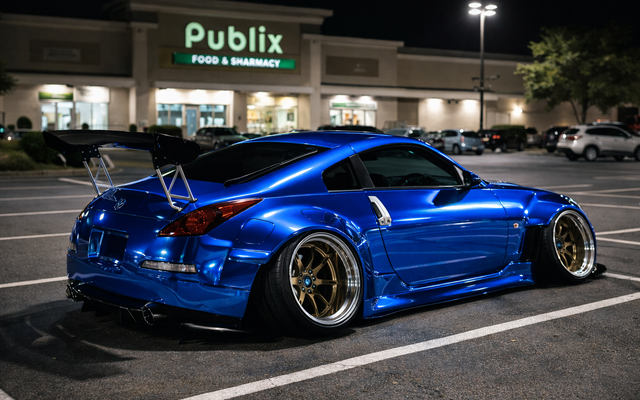
This muscle-derived sports car brings a unique combination of advantages to the drifting world, featuring a low-mass aluminium frame, a transaxle-style gearbox and differential unit that aids in an perfect balance, and the colossal torque of a large-displacement GM LS engine. This combination transforms it into an absolute weapon on track, designed of starting and sustaining continuous drifts with relatively easy use of power. For builders looking for outstanding bang-for-the-buck, the 350Z model Nissan stands out as a top-tier example. It comes from the factory with a rigid platform, a competent factory LSD, and the free-revving VQ35DE powerplant that delivers sufficient power and torque for mastering and progressing in the sport. Its newer version, the Nissan Z34, brings additional advancements in structural rigidity, suspension design, and outright engine power, cementing its position as a popular choice among professional drivers. Additional historic platforms that merit mention include the lightweight rotary-powered Mazda FC, the ever-present S13 Silvia/240SX, the American SN95 generation Mustang, the modern E90 3 Series, and the tiny yet unbelievably engaging and forgiving MX-5 Miata. All of these cars offers a different palette of attributes, difficulties, and potentials, but they all share the basic components necessary to be transformed into a capable sliding vehicle.
However, choosing the right chassis is only the starting point. To unlock the full potential of any of these vehicles, substantial changes to the steering system and damping and springing systems are absolutely essential. This is where the world of precision tuning hardware enters critical importance. The one most transformative upgrade for a purpose-built competition vehicle is the installation of a maximum-angle steering angle kit. These engineered systems, for example those engineered by specialist companies like SLR Speed, are designed to radically increase the chassis's available steering angle. A factory street car is extremely restricted in how far its front wheels can pivot, a safety trade-off for public road driving. In drifting, but, extreme opposite lock is continuously necessary to catch and maintain a drift. An modification kit replaces the OEM steering knuckles, linkages, and often A-arms with components that permit the front tires to attain steering lock beyond 70 or even 80 °, as opposed to a average factory setting of around 40 to 50 degrees.
This vastly greater capability provides the driver with dramatically enhanced command during a drift, allowing it to be much simpler to begin a oversteer moment, sustain it through a sweeping corner, and switch seamlessly from one direction to another. The difference in controllability is nothing short of profound. Coupled with a appropriately specified steering kit is the every bit as essential upgrade to the vehicle's damping system. Off-the-shelf or even high-end road adjustable suspension are generally not engineered for the specific and harsh demands of competitive oversteer. A drift-spec system of adjustable dampers is paramount. These specific suspension components feature unique piston tuning and spring stiffness that are designed for the violent load shifting that is inherent of aggressive driving. When a operator begins a drift, the car's weight is thrown forcefully to the outer of the corner. Proper drift-spec suspension manage this transfer in a consistent fashion, allowing the chassis to find its balance promptly and offering the driver accurate response through the steering wheel and driver's seat. They additionally provide accurate setting of ground clearance, shock absorber stiffness, and weight balance, which are all key parts of optimizing the vehicle's dynamics to a given circuit or competition style. As a system, a high-quality angle modification system and a correctly selected pair of competition adjustable dampers are the core physical foundation upon which all future refinement is based.
Once the core parts is in place, the subsequent critical stage in the development is the detailed setting of the car's wheel angles. This is the world of vehicle alignment optimization, a procedure that can feel daunting to the newcomer but is, in fact, the secret to transforming a assembly of high-performance parts into a harmonious and predictable vehicle. The most discussed element of alignment for sliding is undoubtedly negative camber. Camber angle is the inclination of the wheel relative to the vertical plane when looked at from the front-on of the car. If the upper part of the wheel is tilted towards the car, this is called camber-in. For sliding, inward-leaning wheels on the front axle tires is universally used and is seen as necessary. The purpose is deeply tied to tire contact.
When a chassis is going around a bend at limit slip angles, the frame leans toward the outside of the corner. This chassis roll forces the outer steering tire to diminish its ideal grip area with the asphalt. By applying inward lean, the wheel is pre-leaned to account for this tilt. As the car leans into the bend, the outside front tire flattens out against the asphalt, optimizing its grip at the precise point when it is needed most for directional command. Usually, front adjustments for a competition drift machine vary from approximately -3 degrees to as much as -5 degrees or even greater, depending on the specifics of the car setup, tire selection, and operator style. The coilover setup tips rear wheels also employ negative camber, but the angles are generally more conservative and subtler than the front. Too much camber at the rear can cause the vehicle to overly prone to oversteer and challenging to control on throttle input, as it reduces the usable contact patch of the powered tires during straight-line acceleration. Therefore, rear axle adjustments are frequently in the ballpark of -1 degree to -3 degrees, achieving a careful equilibrium between providing adequate cornering traction to aid in entering and maintaining the slide while also maintaining good traction for exiting the bend. camber angle is merely one component of the broader tuning equation, which furthermore includes toe angle, caster, and suspension-induced steering adjustment.
Toe refers to the direction of the tires when looked at from above. Positive toe means the leading edges of the wheels are closer together than the trailing edges, while negative toe means the reverse. For sliding, a slight amount of front negative toe is often used to improve the turn-in steering reaction, making the car feel more nimble and willing to start a drift. Rear toe setting is typically set to zero or a incredibly minute amount of positive toe to encourage predictability under acceleration. Caster is the longitudinal or aft inclination of the kingpin axis when observed from the side of the car. Positive caster angle enhances feedback and high-speed solidity, and it also boosts negative camber effect during turning, which is highly advantageous. Tuning these parameters is a detailed interaction where a modification to one parameter can and will affect the others. The conventional approach for dialing in a vehicle's suspension geometry for sliding has historically been a time-consuming endeavor of trial and error. A pilot or team would apply a change based on intuition, test the vehicle on track, use the pilot's individual feel and impressions, and then introduce an additional adjustment. This process would continue time after time until the chassis felt "right" or the scheduled track period was exhausted. This approach is not just extremely wasteful in terms of hours and costs, but it is furthermore fundamentally imprecise.
Human sensation is a notoriously inconsistent measurement tool, affected by numerous elements such as exhaustion, evolving track grip levels, weather, and simply vehicle dynamics tool the focus of the driver on car suspension tuning that specific session. What feels "tail-happy" on one lap might feel "tight" on the following run, leading to confusing information and frustrating tweaks. This long-standing challenge in car suspension tuning is exactly where state-of-the-art telemetry systems has stepped in to transform the landscape.
The development and adoption of specialized suspension tuning applications has introduced a new age for building and refining professional drift cars. These tools, showcased by groundbreaking systems like GripDial, operate by physically measuring the live mechanical behavior of the car as it is being driven on the track. As opposed to relying on driver feel, these devices gather objective data on essential variables such as shock absorber movement, corner velocities, lateral and longitudinal g-forces, lock position, and throttle and brake application. This raw information flow is then processed by powerful software that can plot and decode the data in a actionable format. For the very first time, drivers and teams can visualize precisely what the vehicle is doing at any given point of a lap. This function changes the complete suspension tuning process. Imagine the aforementioned task of setting the front axle negative camber for a specific vehicle. Instead of making a adjustment from -3 degrees to -3.5 degrees and then running multiple laps to try and "sense" a change, a telemetry system can deliver real-time and clear feedback. The tool can display visually how the suspension's loading is behaving during the most important moments of a drift: the initial flick, mid-corner, and switch. It can demonstrate if the present angle is allowing the steering tire to keep ideal loading or if the rubber is overloaded on its external shoulder.
The system can subsequently suggest empirical recommendations for adjustment. Perhaps the telemetry indicates that the outside front tire is even overloading its sidewall at -3.5 degrees of camber, indicating that a move towards negative camber, say -4 degrees, might be beneficial. Alternatively, the data might indicate that the tire is failing to coming up to heat or that the inside shoulder is wearing excessively, which could suggest that there is too much angle and a modest decrease back to -3.2 degrees would be more ideal. This degree of accuracy and actionable insight was simply unattainable in the era of exclusively manual adjustment.
The effect of utilizing a dedicated drift telemetry system reaches much further than merely dialing in camber. It functions as an invaluable damper adjustment manual that is specific to your specific car. When fine-tuning the shock absorber settings on your adjustable dampers, rather than using general tips or mimicking another car's setup, you can utilize the software to see how the chassis is performing in reaction to your adjustments. The tool can graph the suspension travel path over a lap, revealing if the dampers are controlling the chassis motion properly or if they are allowing the car to bounce uncontrollably after a flick. It can assist in identifying challenges like bottoming out or topping out, enabling you to apply educated adjustments to spring preload, damping rates, or ride height. This methodology extends just as well to the intricate task of suspension geometry optimization. In addition to camber, the system can give insight into how modifications to toe settings and caster are influencing the vehicle's balance during specific parts of a slide. For example, it can help you to find the optimal amount of front toe out for your individual steering configuration and competition technique by analyzing the quickness of turn-in reaction and the predictability of the car at maximum steering angle. This makes the system an incredibly powerful drift suspension tuning guide that is actively informed by the actual performance of your specific chassis on the tarmac. It shifts the whole process from a mysterious craft into a repeatable engineering exercise.
Additionally, the value of a tool like modern telemetry is not limited to professional tuners with extensive funding. For the club-level enthusiast, it acts as an powerful educational tool. It effectively gives the builder with the analysis of a full-time suspension specialist without needing the associated overhead. It speeds up the tuning process by giving definitive solutions to questions that would otherwise take countless track days of experience to answer. A builder can understand how their individual chassis responds to various adjustments, building a more intuitive comprehension of car control in the process. It furthermore democratizes high-level chassis dynamics concepts, allowing anyone with the drive to perfect their car to achieve it in a structured and successful fashion. This is particularly significant in a sport like drifting, where engineering knowledge has traditionally been a closely guarded commodity among top teams. In the modern era, that capability can be in the hands of any dedicated driver.
In summary, the journey to building and dialing in the ultimate competitive drift car is a multi-stage project that perfectly blends proven engineering principles with cutting-edge data technology. It starts with the wise pick of a legendary car, followed by the installation of essential drift-spec parts like drift-spec steering angle kits and correctly selected performance coilovers. The build then advances into the precision stage of alignment optimization, where settings like camber, toe setting, and caster are meticulously configured to suit the vehicle's upgraded hardware and the pilot's individual style. The final step, and what genuinely separates the contemporary approach from the traditional methods, is the adoption of a powerful suspension tuning application. This system eradicates the guesswork and trial and error of solely seat-of-the-pants tuning by delivering empirical, real-time telemetry on how the chassis is actually behaving. It serves as an indispensable suspension tuning tool, a definitive alignment optimization handbook, and a master vehicle dynamics tool. As a complete package, this holistic methodology leads to that all element of the competition vehicle—from the selection of the car to the last adjustment on the suspension—is perfected for peak performance on the competition venue. It embodies the total maturation of the art of oversteer driving, bridging mechanical pilot talent with data-informed suspension engineering to build the most competitive machines imaginable.